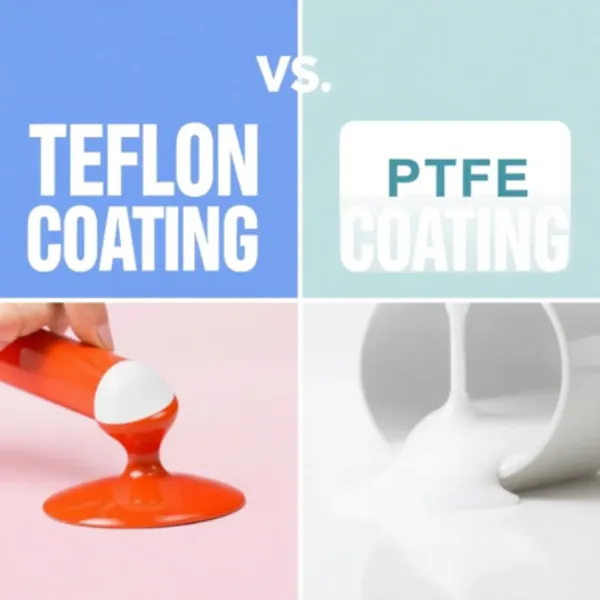
- PTFE is the Material, Teflon is the Brand – PTFE is a synthetic polymer; Teflon® is a trademarked name for PTFE-based coatings by Chemours.
- Similar Properties, Different Uses – Both offer non-stick, chemical-resistant, and heat-resistant benefits, but Teflon coatings may include other fluoropolymers like FEP or PFA.
- Teflon is Certified and Branded – Ideal for regulated industries needing compliance; PTFE is more common in general industrial applications.
- Cost Difference – PTFE coatings are typically more affordable, while Teflon coatings may carry higher costs due to licensing and branding.
- Application Matters – Choose based on industry needs—Teflon for specialized, certified use; PTFE for reliable, cost-effective performance.
Understanding the Confusion: Teflon vs. PTFE Coating
Teflon coating and PTFE coating are often used interchangeably, but are they really the same thing? In short—yes and no. PTFE (Polytetrafluoroethylene) is the chemical name of the polymer, while Teflon® is a brand name trademarked by Chemours (formerly DuPont). Teflon coatings are made from PTFE, but not all PTFE coatings are Teflon. This distinction matters when choosing the right non-stick, low-friction, or chemical-resistant coating for industrial applications.
This blog clears up the confusion and helps you decide which option best suits your needs.
What is PTFE Coating?
PTFE is a synthetic fluoropolymer known for its outstanding chemical resistance, non-stick surface, low friction, and high-temperature tolerance. As a coating, PTFE is widely used in industries ranging from food processing to aerospace.
✅ Non-Stick Properties: Excellent for applications where materials must not adhere to the surface.
✅ Chemical Inertness: Resistant to nearly all industrial chemicals and solvents.
✅ Temperature Resistance: Withstands temperatures from -200°C to +260°C.
✅ Electrical Insulation: PTFE is also a great electrical insulator.
What is Teflon Coating?
Teflon coating refers to a family of fluoropolymer-based coatings developed and trademarked by Chemours. Teflon coatings often include PTFE, but may also contain other fluoropolymers like FEP or PFA, depending on the application.
There are several types of Teflon coatings, including:
🔹 Teflon PTFE: Most common; non-stick, chemically resistant, and heat-stable.
🔹 Teflon FEP (Fluorinated Ethylene Propylene): Melt-processable, making it ideal for applications needing a smooth finish.
🔹 Teflon PFA (Perfluoroalkoxy Alkane): Similar to FEP but offers higher temperature and chemical resistance.
Teflon Coating vs PTFE Coating: Key Differences
Feature | PTFE Coating | Teflon Coating
Chemical Basis | Pure PTFE | PTFE, FEP, or PFA (fluoropolymer family)
Brand/Trademark | Generic | Registered Trademark
Non-Stick Properties | ✅ Excellent | ✅ Excellent
Heat Resistance | ✅ Up to 260°C | ✅ Up to 290°C (depending on type)
Cost | ✅ More budget-friendly | ⚠️ Typically higher due to branding/licensing
Application Flexibility | ✅ Widely used | ✅ Branded and certified systems
When Should You Choose PTFE or Teflon Coating?
Choose Teflon Coating if you need certified, branded performance, especially in regulated industries like aerospace, defense, medical, or food processing where compliance with specific Teflon standards is required.
Choose PTFE Coating if you’re looking for cost-effective, non-stick, or chemical-resistant properties in general industrial use. It’s ideal for OEMs and manufacturers seeking reliable performance without premium branding.
- Enhanced Protection: Reduces visibility under night vision and heat-sensing drones.
- Versatility: Works across multiple military platforms, including land, air, and naval applications.
- Cost-Effective: A practical alternative to expensive stealth technologies like composite materials.
- Compliance with Defense Standards: Developed according to military-grade infrared camouflage requirements.
Frequently Asked Questions (FAQs)
1. Is PTFE the same as Teflon?
PTFE is the chemical; Teflon is a brand of PTFE-based coatings. They have similar properties but may differ in formulation or certification.
2. Can I use PTFE instead of Teflon?
Yes, in most industrial applications PTFE can be used as an alternative to Teflon—unless a branded or certified coating is required.
3. Are there other fluoropolymer coatings besides PTFE and Teflon?
Yes, other options include FEP, PFA, ETFE, and more, each with unique properties for specialized applications.
4. Which industries use PTFE or Teflon coatings?
These coatings are widely used in food processing, chemical plants, aerospace, automotive, electronics, and medical equipment manufacturing.
Final Thoughts: Know the Difference, Choose with Confidence
While PTFE and Teflon coatings offer similar performance, understanding the distinction between the chemical compound and the branded product helps you make informed, cost-effective decisions. Whether you need a high-performance non-stick surface or a chemically inert, heat-resistant coating, both PTFE and Teflon offer industry-leading benefits.
🔹 Need help choosing the right coating for your application? Contact us today to speak with our industrial coating experts and explore tailored solutions. 🛠️
🔗 Related Reads:
✔️ Industrial Ceramic Coatings: Benefits & Applications
✔️ Anti-Corrosion Coatings for Harsh Environments
✔️ High-Temperature Coatings: Performance Under Pressure
are teflon and ptfe the same
are teflon and ptfe the same thing
best pans without teflon
best rice cooker without teflon
best teflon cookware
black teflon ptfe
coating ptfe
density of ptfe
difference between ptfe and teflon
how ptfe is made
non ptfe cookware
non ptfe non stick cookware
non stick ptfenon stick ptfe coating
ptfe and teflonteflon uses
teflon uses in daily life
teflon vs ceramic coating
teflon vs ptfe
what is ptfe teflon
what teflon coating
where teflon coating is done
Keywords