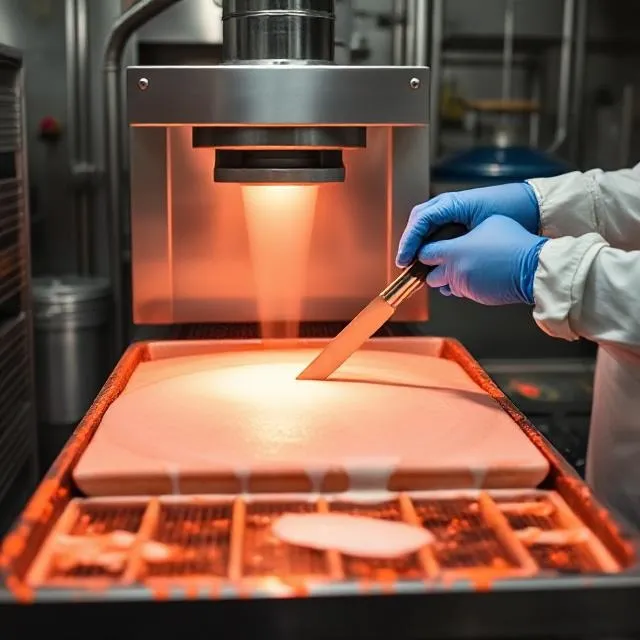
- Food processing equipment needs coatings to ensure hygiene, durability, and non-stick performance.
- PTFE, Ceramic, Epoxy, and Nano-coatings are the most common choices, each suited to different conditions.
- Coating selection depends on food safety compliance, operating environment, and maintenance needs.
- PTFE is best for non-stick and high-heat uses; ceramics excel in abrasion resistance; epoxies protect against moisture/chemicals; nano-coatings offer antimicrobial protection.
- Choosing the right coating enhances food safety, equipment lifespan, and production efficiency.
Food safety, hygiene, and operational efficiency are top priorities in the food processing industry. From conveyor belts and baking trays to mixers and molds, the equipment used in production must meet strict standards for cleanliness, durability, and performance. One of the most effective ways to ensure this is by selecting the right protective coating.
The correct coating not only improves equipment lifespan but also prevents contamination, reduces downtime, and enhances overall production quality.
Why Coatings Matter in Food Processing
Food processing equipment is constantly exposed to extreme conditions such as:
- High temperatures during baking, roasting, or frying
- Moisture and cleaning chemicals during sanitation cycles
- Sticky or oily ingredients that cause buildup
- Abrasive wear from continuous usage
Without the right coating, these factors can quickly degrade equipment and compromise food safety. Choosing the right surface treatment is therefore a critical decision for every manufacturer.
Popular Coating Options for Food Processing Equipment
1. PTFE (Polytetrafluoroethylene) Coatings
- Excellent non-stick properties
- FDA-approved and safe for direct food contact
- Resistant to high heat (up to 260°C)
- Commonly used for baking trays, molds, and conveyor belts
2. Ceramic Coatings
- High hardness and abrasion resistance
- Suitable for cutting tools, mixers, and grinders
- Withstands repeated cleaning cycles
- Provides hygienic, easy-to-clean surfaces
3. Epoxy Coatings
- Cost-effective solution for surfaces exposed to moisture and chemicals
- Good adhesion to metal substrates
- Often used for flooring, storage tanks, and non-direct food contact areas
4. Nano-Coatings
- Advanced coatings with anti-microbial and anti-fouling properties
- Ideal for equipment where hygiene and sterility are critical
- Improves resistance to biofilm and bacterial growth
Key Factors to Consider Before Choosing a Coating
When selecting a coating for your food processing equipment, evaluate these points:
- Food Safety Compliance: Check for FDA, EU, or FSSAI approvals.
- Operating Environment: Consider exposure to heat, chemicals, and cleaning processes.
- Non-Stick Requirements: For baking or sticky foods, prioritize low-friction surfaces.
- Durability & Maintenance: Coatings should withstand frequent cleaning without degrading.
- Cost vs. Performance: Balance initial investment with long-term benefits.
Industry Insight
Experts highlight that with rising food safety regulations and consumer demand for quality, investing in certified and specialized coatings is no longer optional. It ensures compliance, reduces contamination risks, and improves efficiency in the long run.
“Choosing the right coating is not just about extending equipment life — it’s about safeguarding the quality of food that reaches consumers,” says a senior consultant in food technology.
Final Thoughts
The right coating can transform food processing equipment into hygienic, durable, and high-performance assets. Whether it’s PTFE for non-stick baking, ceramic for abrasion resistance, or nano-coatings for antimicrobial protection, the choice depends on your process requirements and compliance needs.
If you are exploring coating solutions tailored for the food industry, our experts can connect you with certified suppliers who deliver FDA-compliant, high-performance coatings for every application.
Request a Consultation | Get a Quote | Talk to a Coating Expert
Keywords